
Act 1: “Day Tripper”
Day trips are an important part of each Shirleyfest. Usually my day trips are scattered throughout the month, but this time my visitors’ schedule meant they have all come in the last week. It is nice in a way to be able to compare and contrast them in a short time span. I have developed a really good system for day trips that I then tweak for each city. My methodology is so good that yesterday I was contemplating writing an article called “The art of perfect holiday day trips.” Then, just to keep me humble, I had an amateur goof that I’ll tell you about at the end of Act 1.
Segovia, Spain
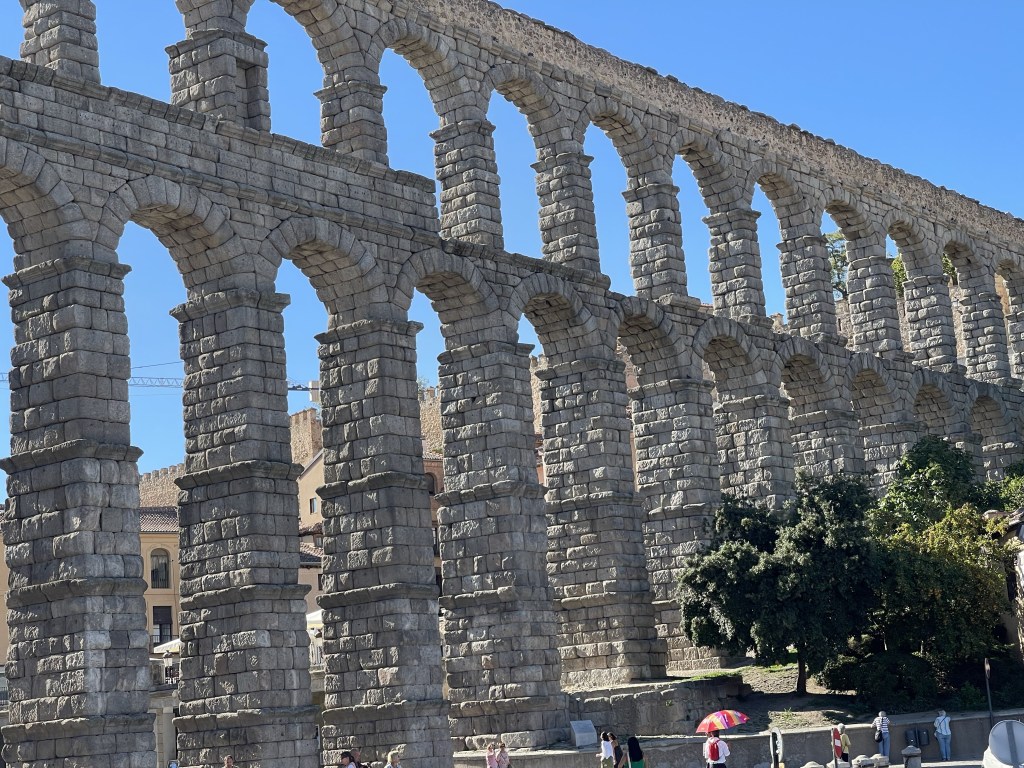
The aqueduct in Segovia is one of the most spectacular legacies of the Roman Empire in Spain. It is made up of 166 arches spanning more than 10 miles. It transports water from La Acebeda to the Alcázar, defying the laws of gravity, since the only thing that keeps the structure standing is its balance of forces; no kind of mortar was used in its construction.
Wednesday night, I am out to dinner with my new friend Chris. Afterwards, we join an InterNations meet up in Retiro Park. So many people from so many countries drinking and listening to music at a bar in the middle of the park. I meet such interesting men and women! I tell you this because it was so much fun that I don’t walk back thru the park and reach my flat until after midnight. But…. I really want to see those Segovian aqueducts! I’m up early and catch the local train to the major train station at Chamartin. Quickly changing tracks, I take the 27 minute fast train to Segovia. I hop the waiting bus and 10 minutes later I’m standing in front of the aqueducts.
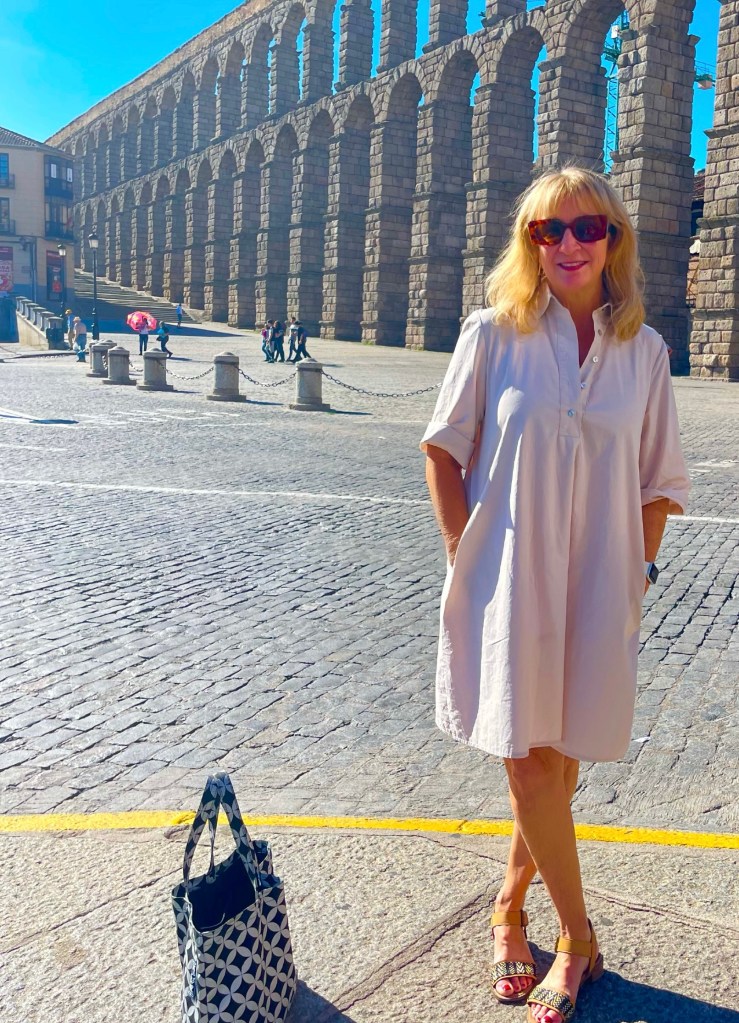

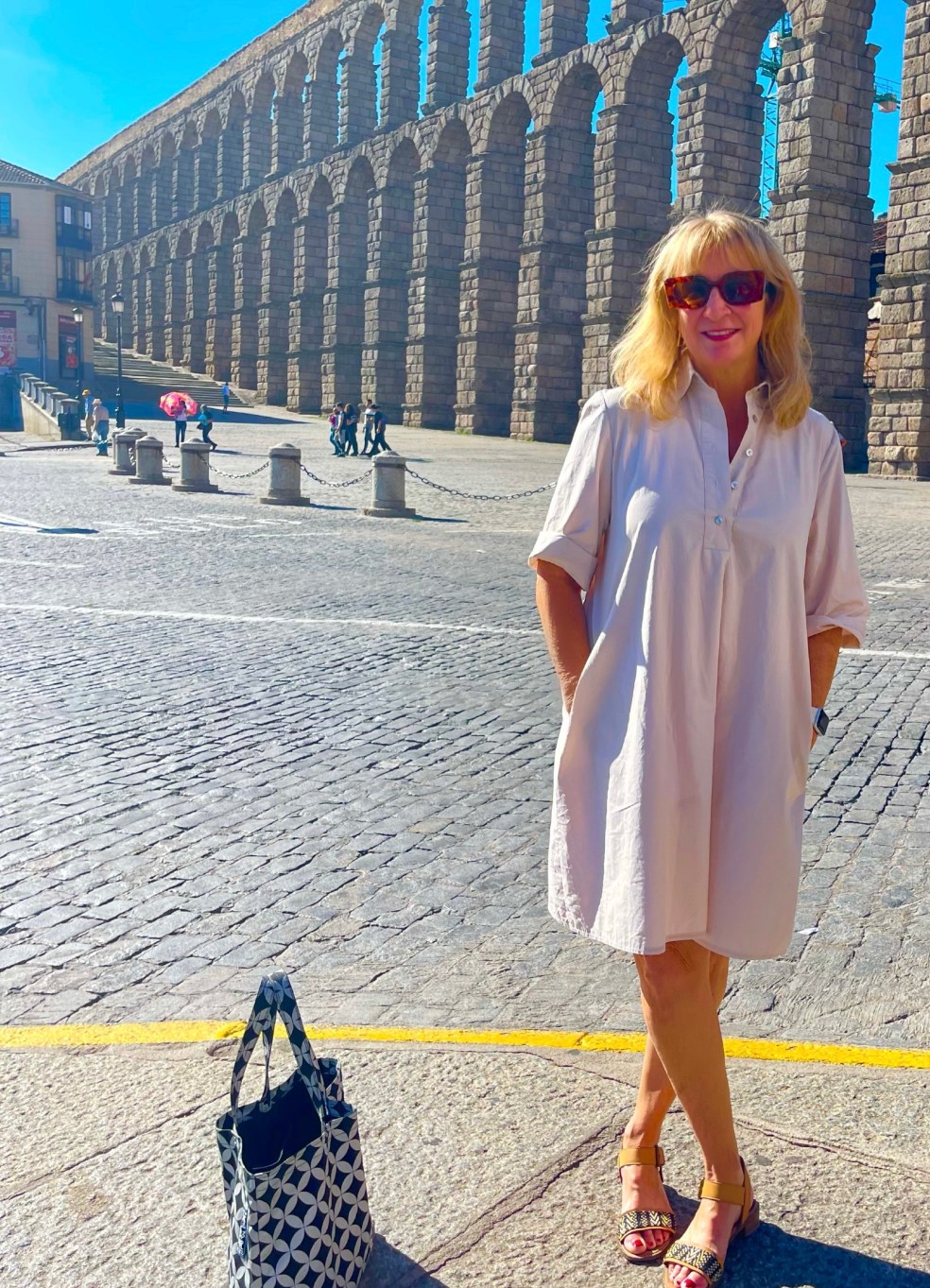
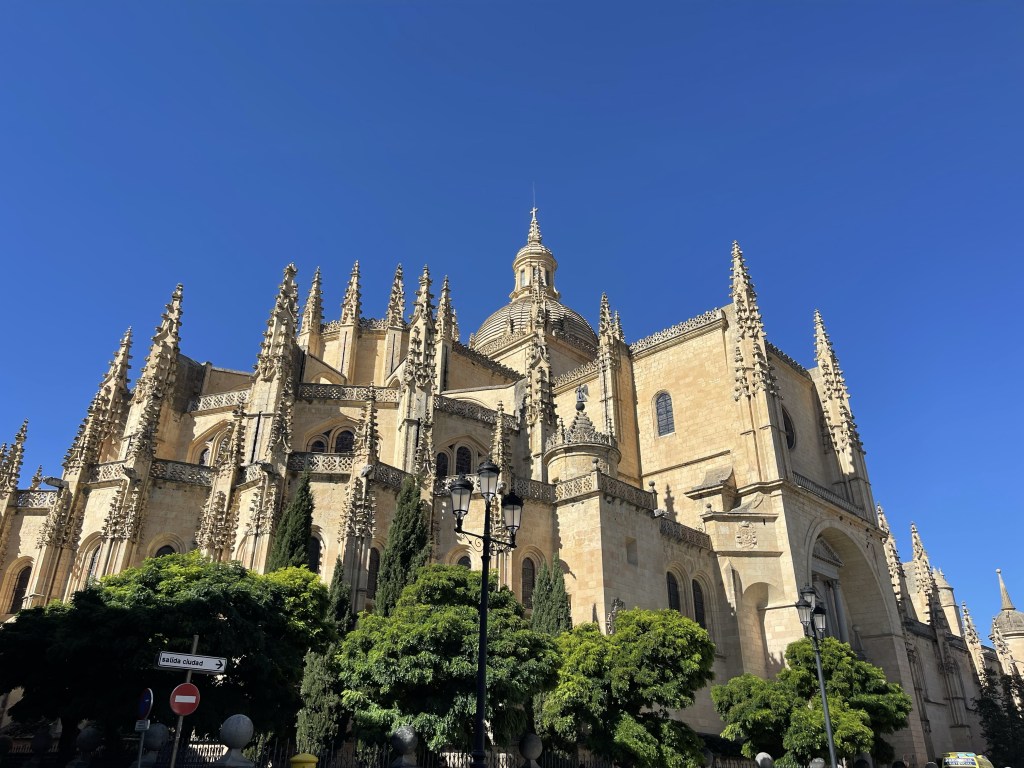
First, I sit at an outdoor cafe just to admire this magnificent structure before walking through the old city to the wonderful Gothic Cathedral built in 1532.
Then it’s on to the Alcazar. There is a deep moat with a drawbridge which provides access to this fortress, which became the royal residence in the 13th century,
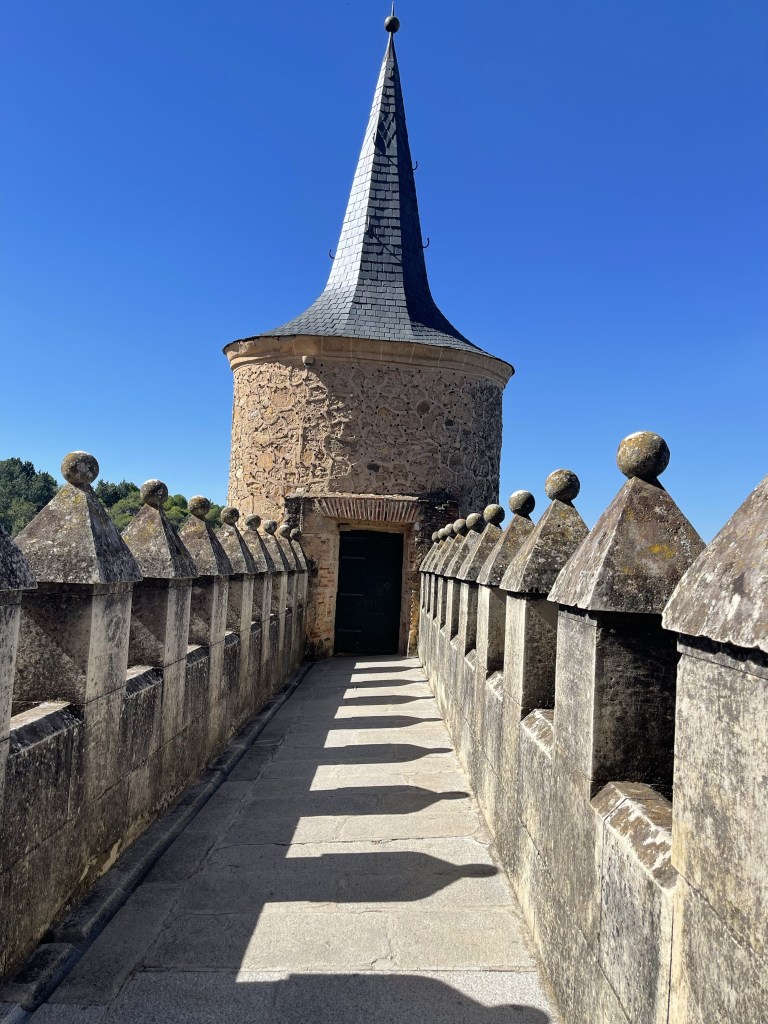


The views along the way are magnificent.
My local Madrid friends Lola and Gonzalo have told me that in Segovia I must eat at Casa Duque and I must order suckling pig and the local gigantic beans.

In Segovia, suckling pigs whose quality and authenticity are guaranteed by the label “Cochinilla de Segovia” are raised on specific farms dedicated entirely to this animal alone. What makes dishes of suckling pig different are the diet fed to the pig’s mother, the suckling’s weight (around 10 pounds ) and its age, which cannot exceed three weeks. Another one of the jewels of Segovia gastronomy apparently is the Judión Granja bean, named after the town of La Granja in San Ildefonso. Called judión for its large size, this bean is surprisingly very tender. I make a reservation from the train and I’m happy I did. Casa Duque is the oldest restaurant in Segovia and very well regarded. The beans come with chorizo sausage and a small something I had to ask about ( pig’s ear!). I left that last bit, but the beans and sausage are delicious. Then comes the suckling pig. My my. Excellent.
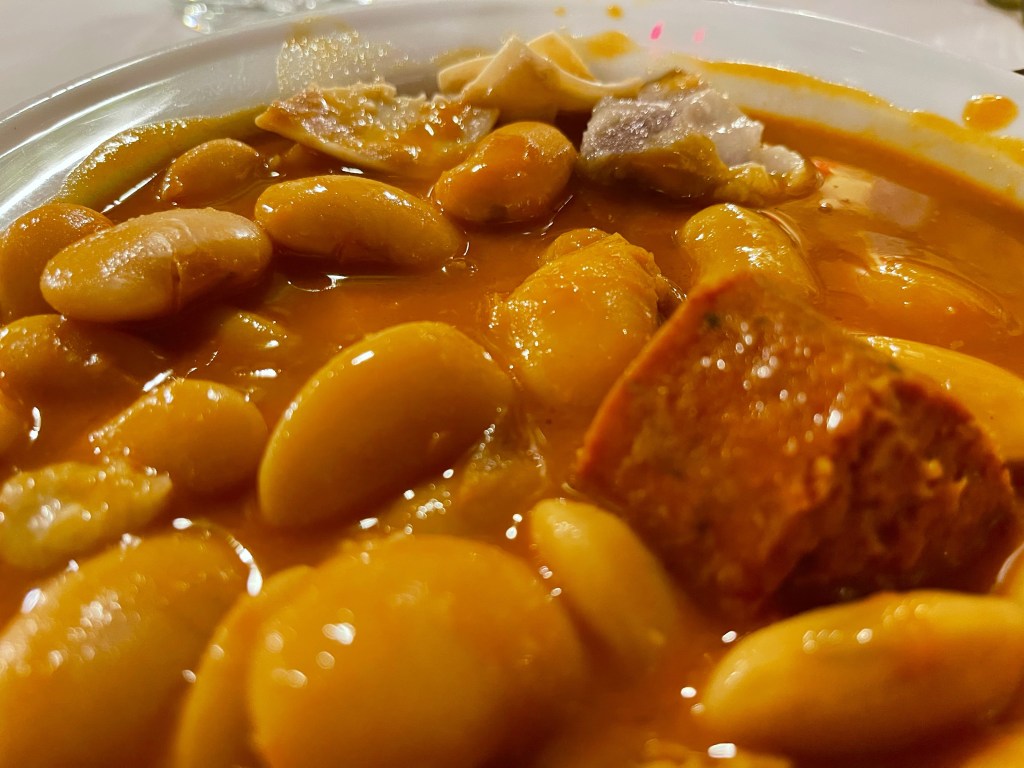
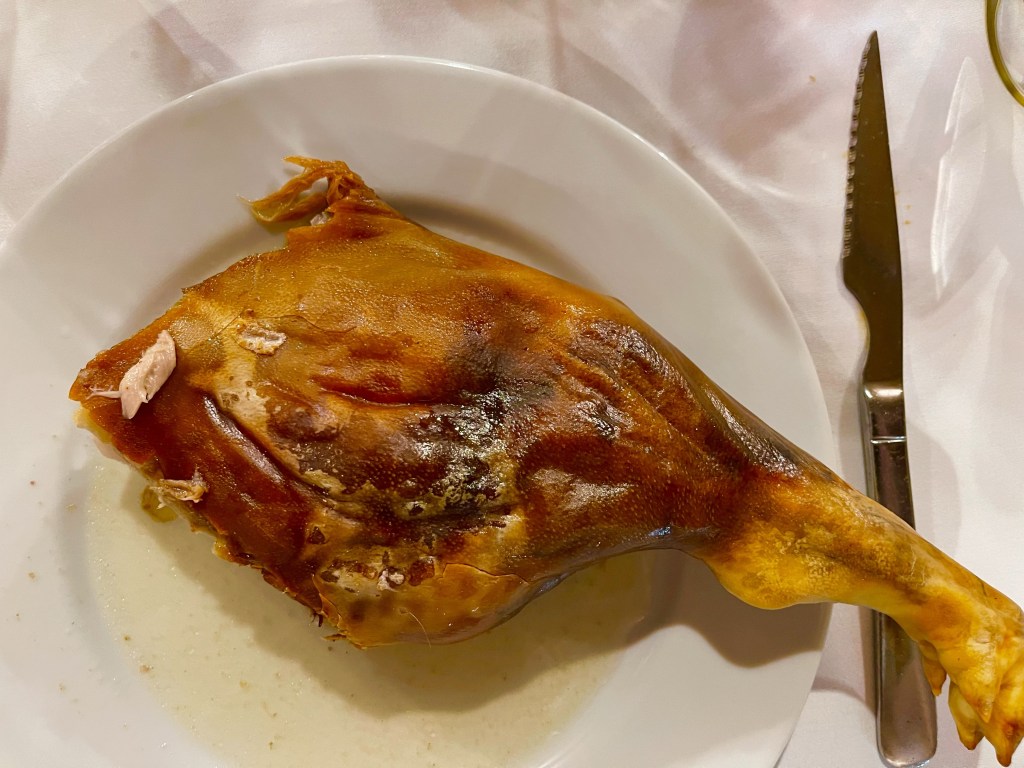
Too full for dessert, I finish my wine and check out Plaza Mayor where a lively market is taking place.
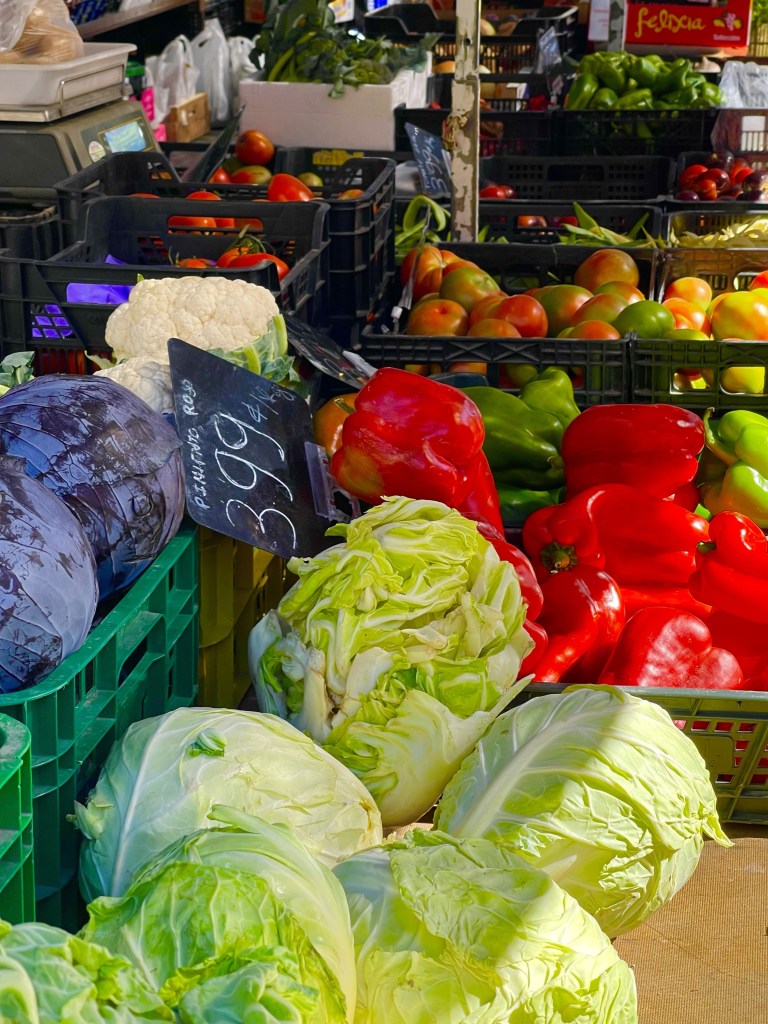

I wander around the old Jewish city.

I reverse my steps and head back to Madrid.
Toledo, Spain
The night before my Toledo excursion, I go to my favorite neighborhood place, Delivinos and while intending to stay just a short while, I run into Lola and we started talking and then Gonzalo joins us and a few others…it’s late again, but I’ve already bought my 8:40 am ticket to Toledo for the next day. Oh well..lots of coffee in the morning and I’m off.
I take the fast train and I am in Toledo in 30 minutes. I hop on the bus to the city center and after a little more coffee, I head for the alcazar fortress.
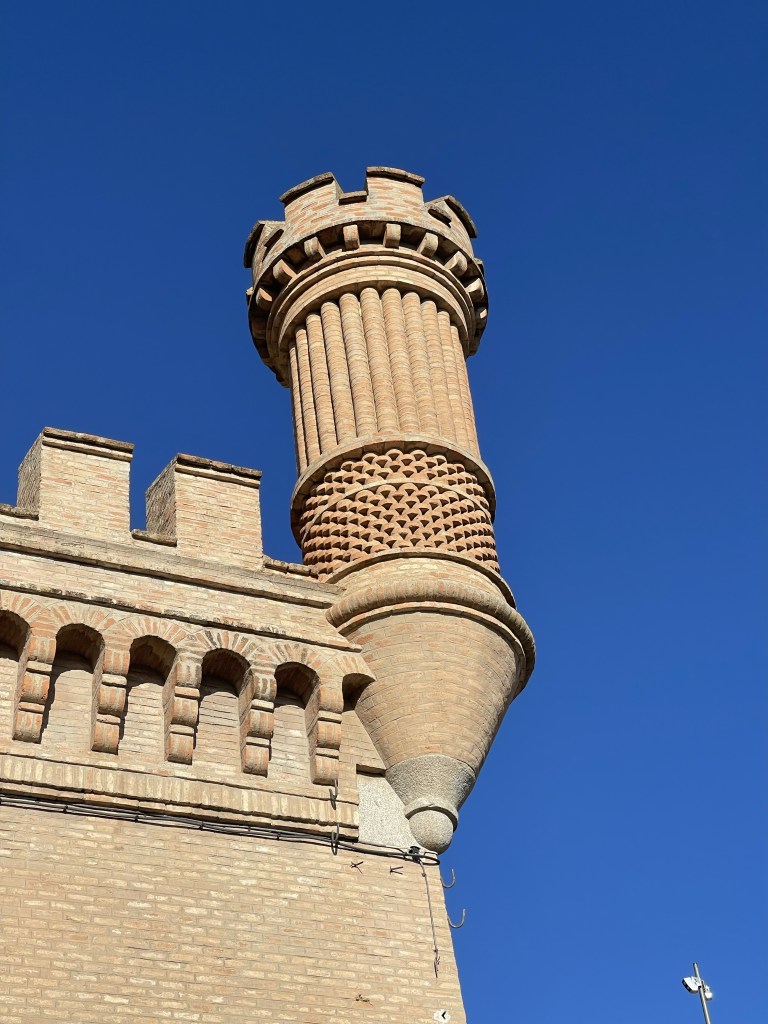
Once used as a Roman palace in the 3rd century, it was restored under Alfonso VI and Alfonso X and renovated in 1535. During the Spanish Civil War, nationalist Colonel Jose Moscardo Ituarte held the building against overwhelming Spanish Republican forces in the Siege of the Alcazar.

Oddly, no one is here. I roam about taking pictures, pretending I am in the Spanish military and enjoying having it all to myself.
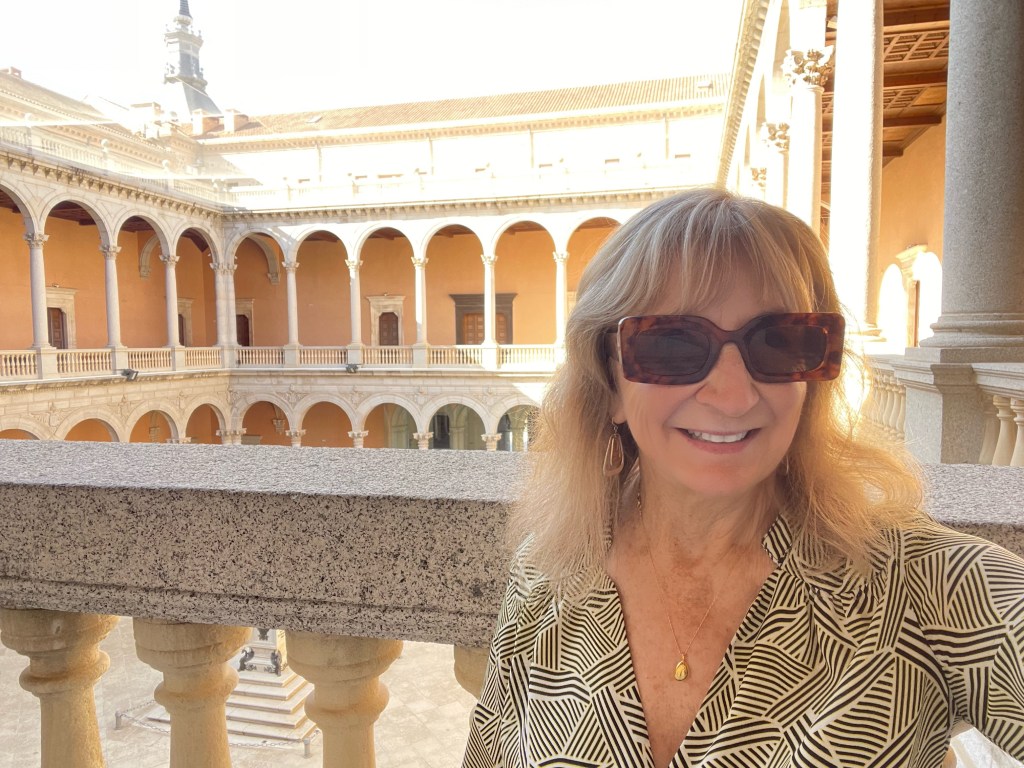
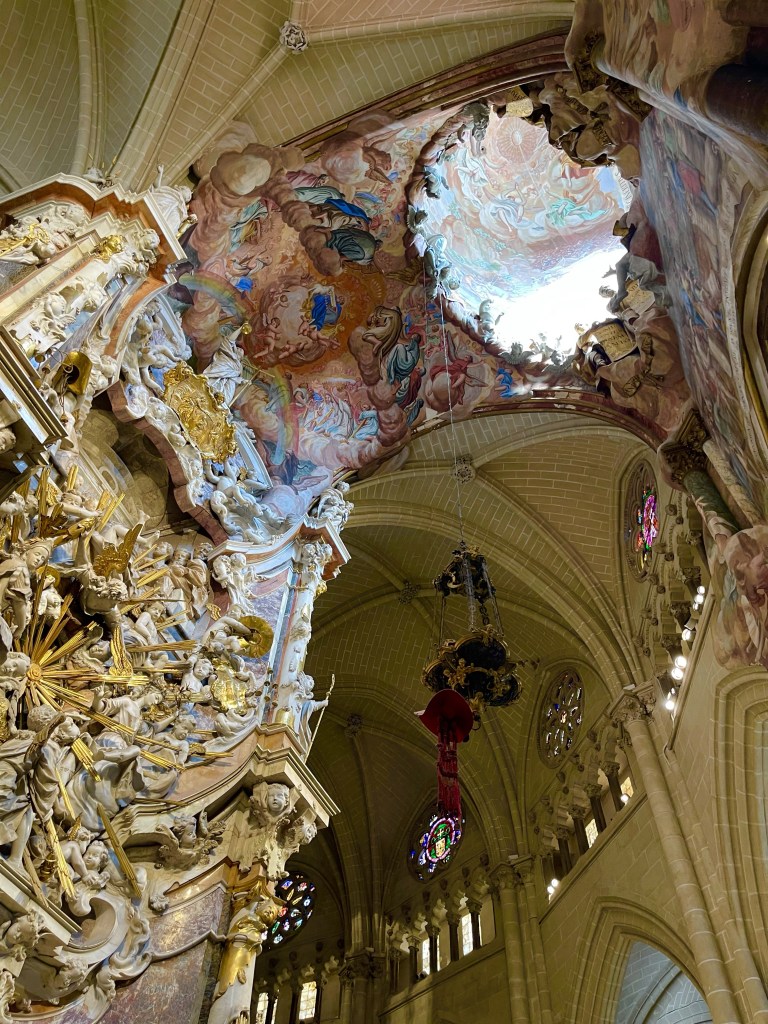
Afterwards I go to the magnificent Santa Iglesia Catedral Primada de Toledo.
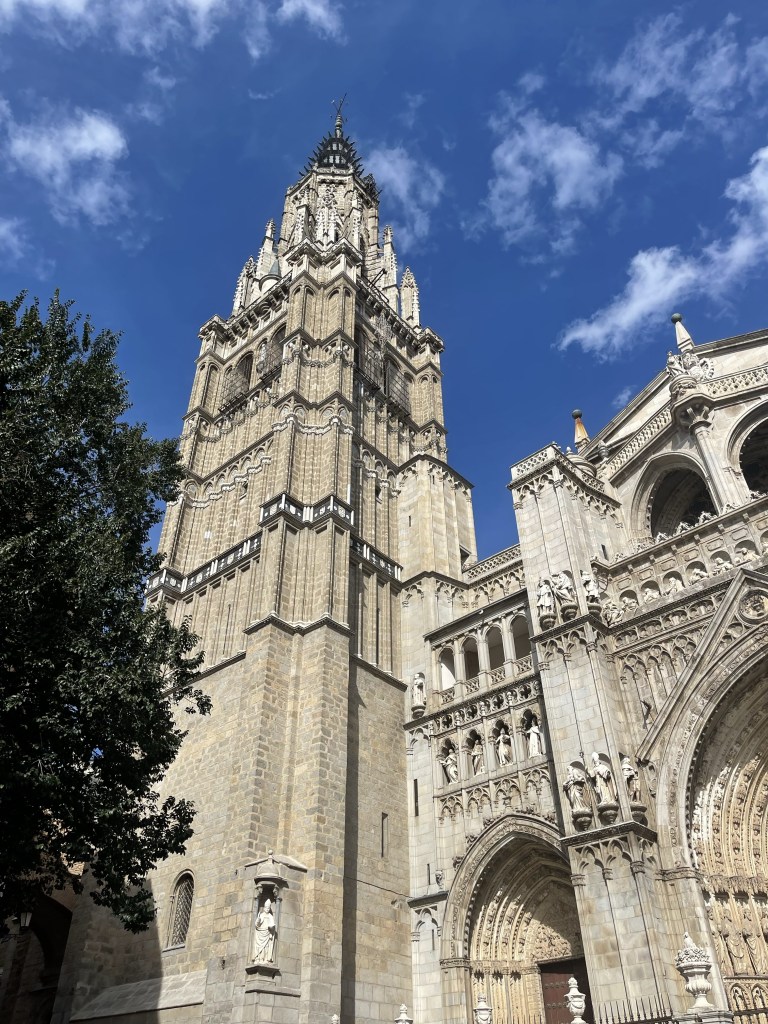
This Cathedral is a Roman Catholic church built in a Gothic style. The site where now the cathedral stands has a long history. There was originally a 6th-century Visigothic basilica, but during the Muslim invasion, it was turned into a mosque for over 300 years. I used an audio guide as there was so much to see. It took my breath away.
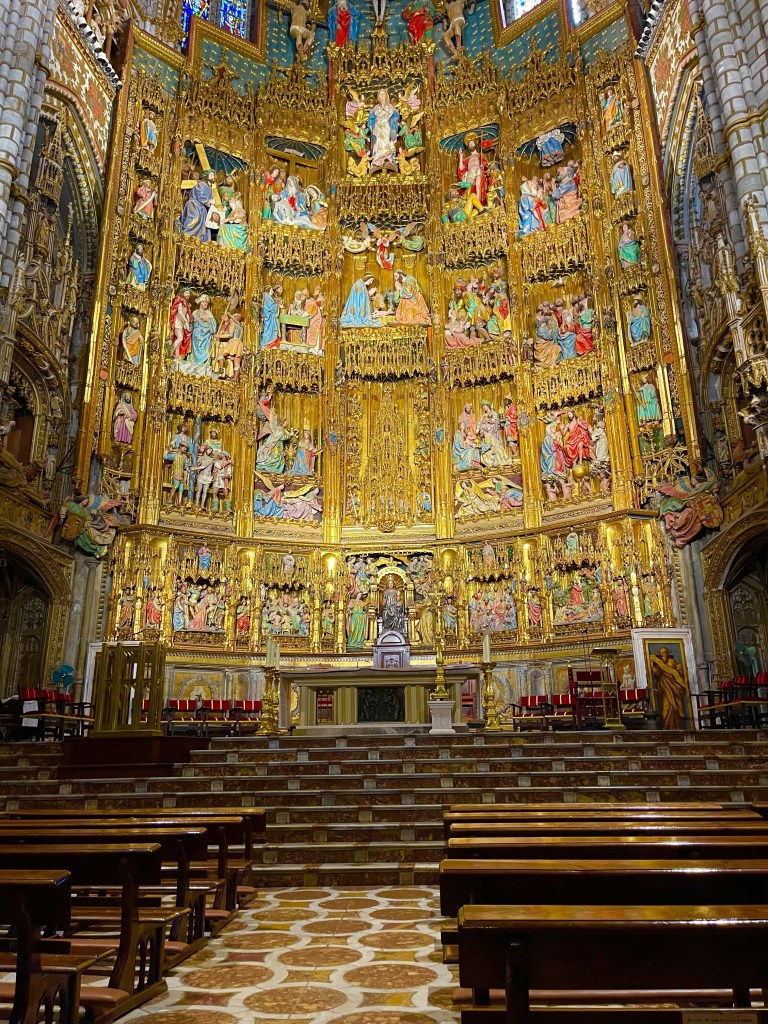
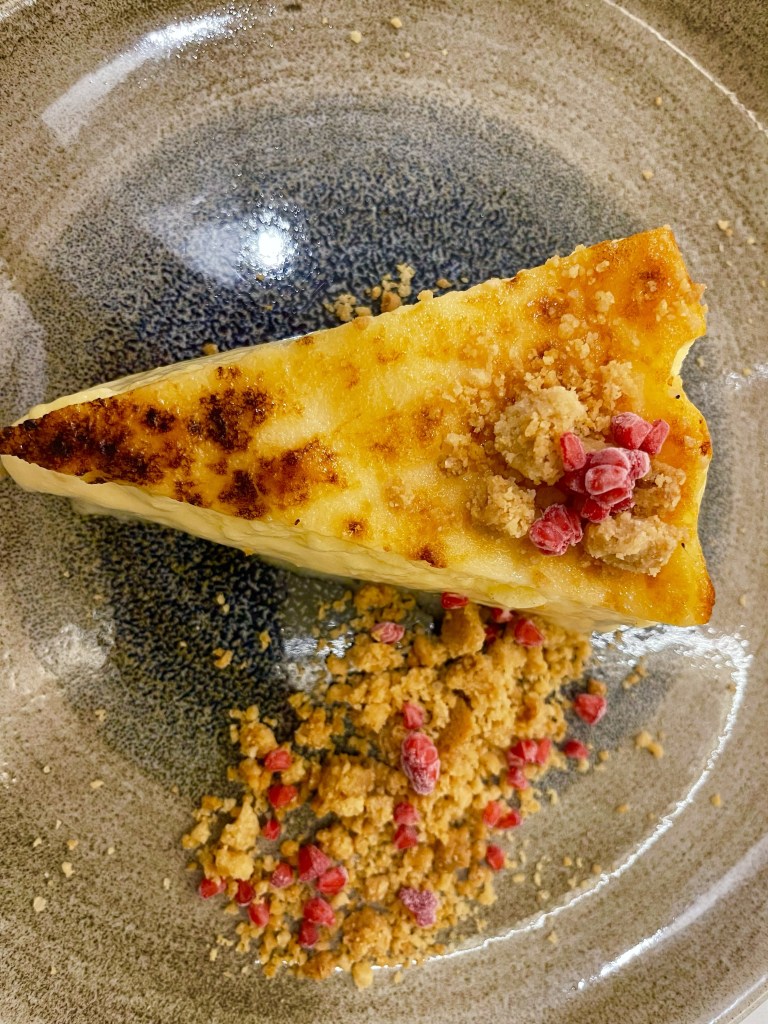
Before taking a walking tour of the old city I take myself to lunch at the Michelin La Cabalas. Expecting a nice lunch, I have one of my best meals in Spain. See for yourself.


My walking tour with Carlos is interesting. I am glad I went to the Alcazar and the Cathedral before lunch, as his tour is of the back streets and neighborhoods of Toledo.
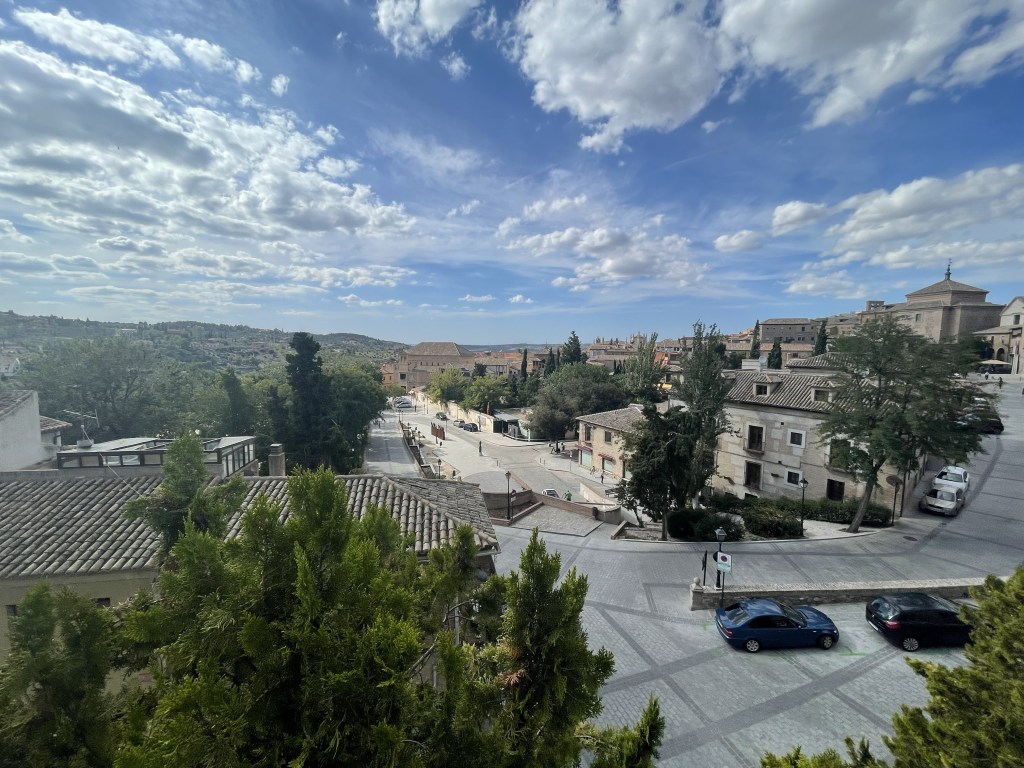
Very interesting and enjoyable. The train home is quick and easy.
Alacalá De Henares, Spain
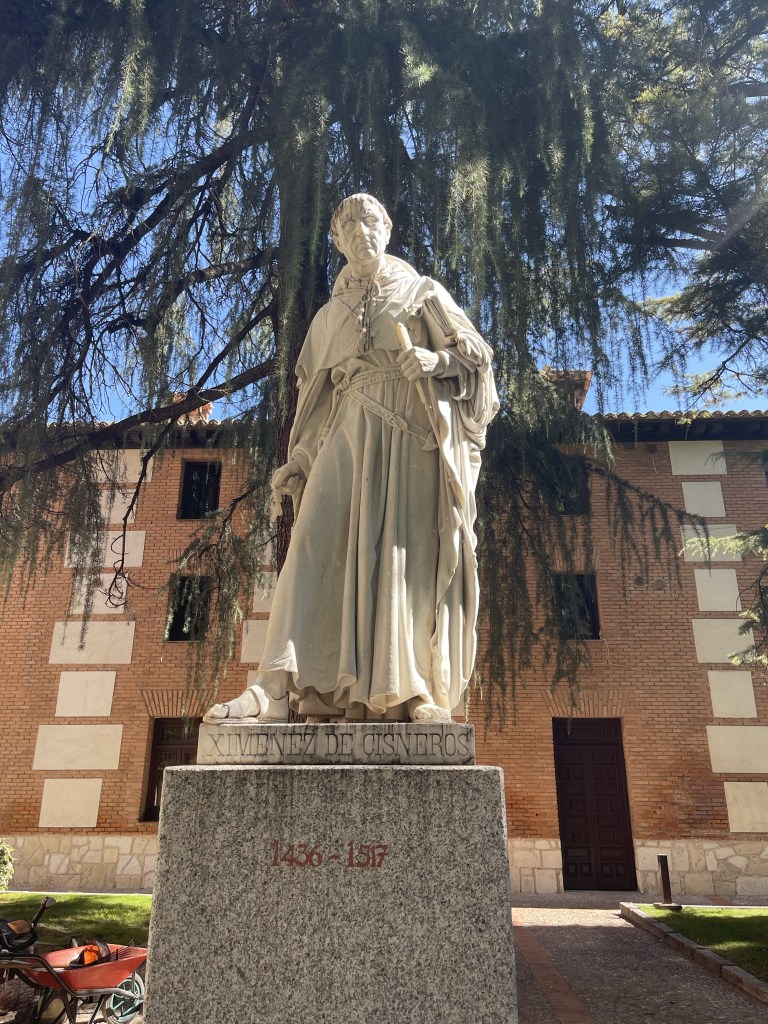
I have to admit I had never heard of Alaclá De Henares before Monday night. I was at Alimentacion Quiroga at the invitation of Martin and Concha. They live part time in Madrid and part time in Dover, England. I met them the prior week at the same place we are now sitting. We started talking then and I knew I wanted to see them again. This time I ask about their favorite day trips from Madrid. They both agree: Alaclá De Henares. Hmmmm…what? Yikes how did I not know the birthplace of Cervantes and the home of one of the oldest universities in the world. The University of Alcalá was founded in 1293 as a medieval university and rebounded as a modern university in 1975. It attracts many Spanish and international students – many of whom come on Erasmus or study abroad programs. The university is also famous for its annual Cervantes Prize, awarded for lifetime achievement of a writer in the Spanish language. I tour the birthplace of Cervantes which is now a lovely museum, climb the tower and visit other historical building.
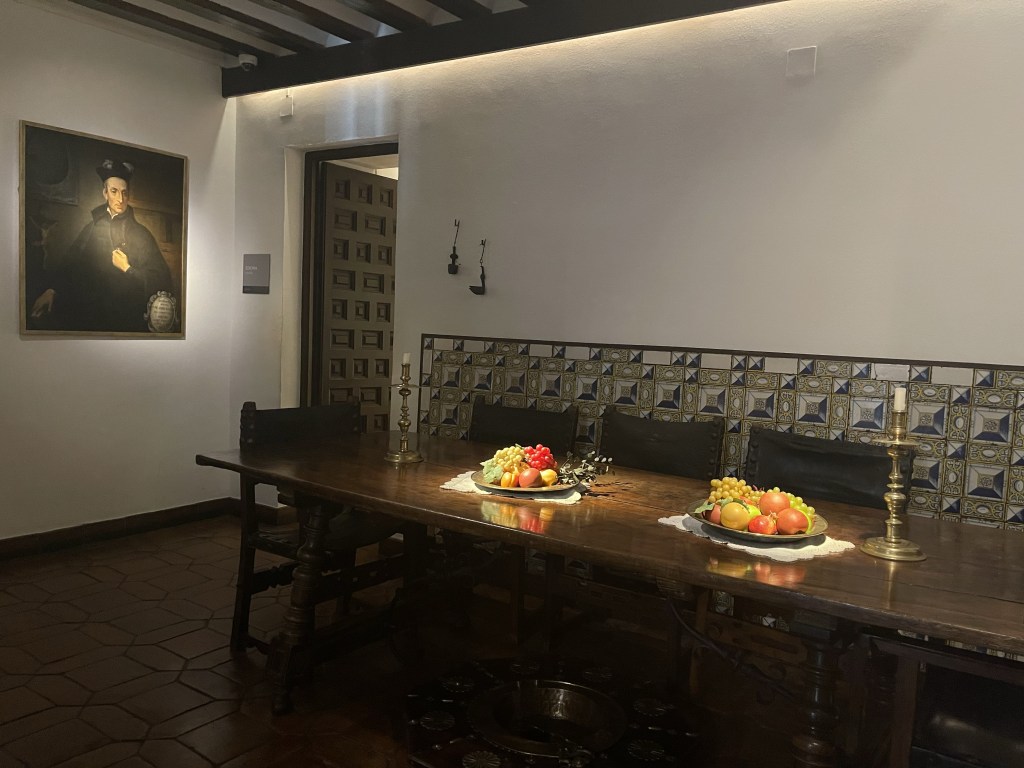

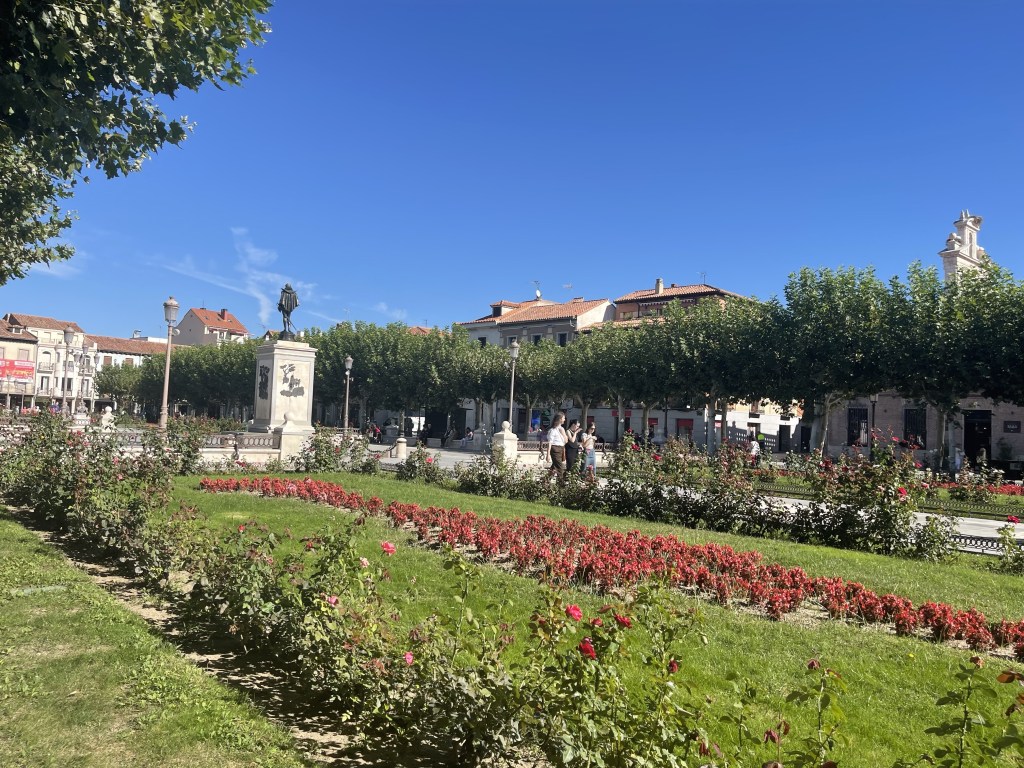
I’m really intent on finding these caramelized nuts that this city is famous for. They are called garrapiñadas and you can buy them at the stores but apparently there’s nothing like buying them from the Convent of the Poor Clares of San Diego (Convento de las Clarisas de San Diego), the candied almonds’ birthplace. The Poor Clares have been making garrapiñadas since their Order was established in Alcalá de Henares around 1670 . You buy almonds there by ringing a bell. A nun is hidden behind a turning booth and after you put money in the booth, she returns roasted almonds. You never see the nun, communication is verbal only.

Having secured my garrapiñadas, I’m ready for lunch. Martin said the best place is El Casino so there I head. I score a balcony table at this busy place. The daily menu is 15 euros and consists of three courses plus a beer or wine. This is one of the nicest restaurants in town. How do they do it?! I’m happy to partake.


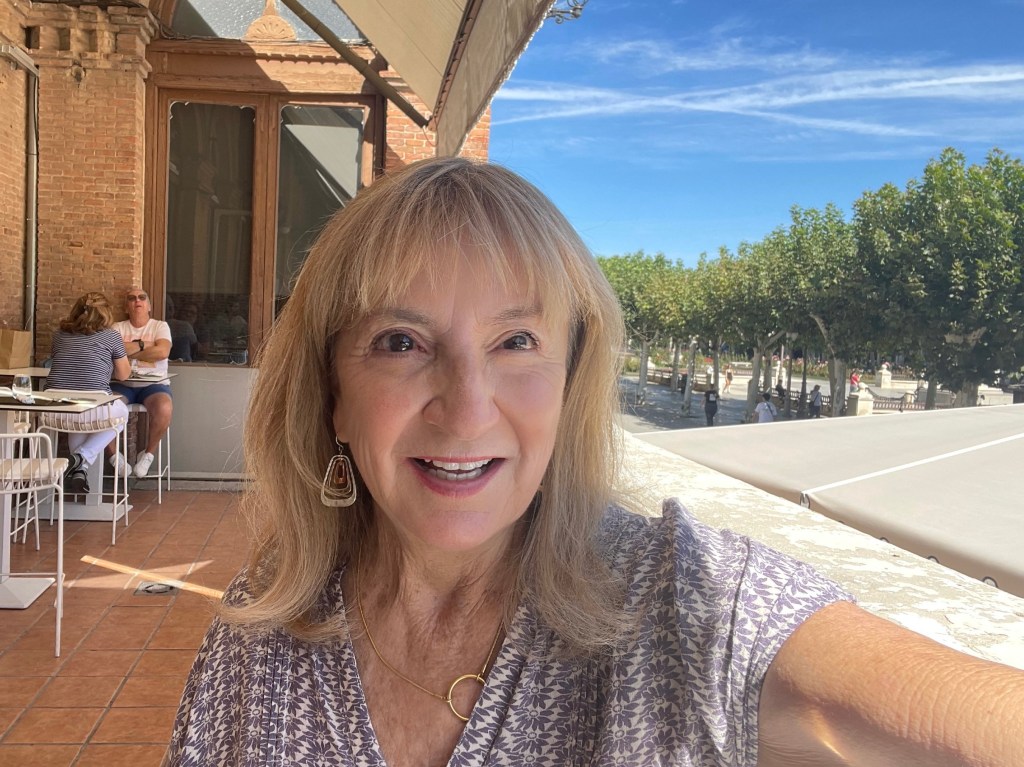
Afterwards another fast train ride home.
El Escaroil
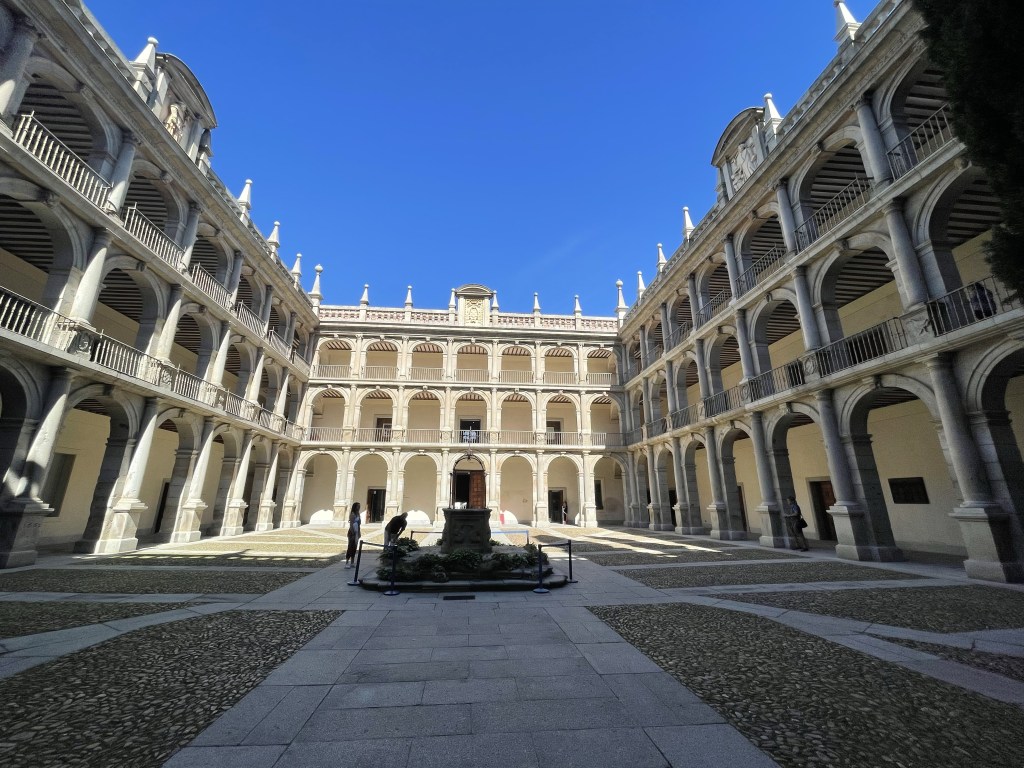
When my new friend Monica left for England, she texted me to be sure to go to El Escaroil.
El Escorial is a vast building complex located in San Lorenzo de El Escorial, near Madrid. The building is the most important architectural monument of the Spanish Renaissance. Construction of El Escorial began in 1563 and ended in 1584. The project was conceived by King Philip II, who wanted a building to serve the multiple purposes of a burial place for his father, Holy Roman emperor Charles V; a Hieronymite monastery; and a palace. Several other people mentioned that I must see this place. Interestingly Martin and Concha thought it was not to be visited. I may have misunderstood, but I think they believed it was built on the backs of the less fortunate and therefore should be shunned. I decided I would have to decide for myself.
While every guide book says to take the bus to El Escaroil, I am not a fan of buses over trains ( see my post on Quebec City). It was really hard to get google to show me the way by train. And guidebooks warned that if you took the train you would have a long walk to the monastery. Hogwash! I easily took the local train a few blocks from my flat. When I arrive, it is a less than one mile walk through the Prince’s Palace park.


I arrive early and there is no line ( later I saw in the afternoon that the line was enormous). I buy a ticket and then ask if there is an English tour, as the only sign posted says tours in French and Spanish. The attendant looks at me and said “si” and hand writes a sign and tapes it to the window saying English tour in 15 minutes. I pay another 4 euros and wait. In 15 minutes, a big crowd gathers and the tour guide and the attendees start talking rapidly in Spanish. “Pardon” I say. “?Gita en Ingles”
The guide smiles and says, “oh you are the one”. She points to her colleague— “this is your English person”. Wait..it’s just me? Did they make up a tour for just me? Yes, I have a private guide for two hours all over this amazing monastery, church, school, gardens and library.
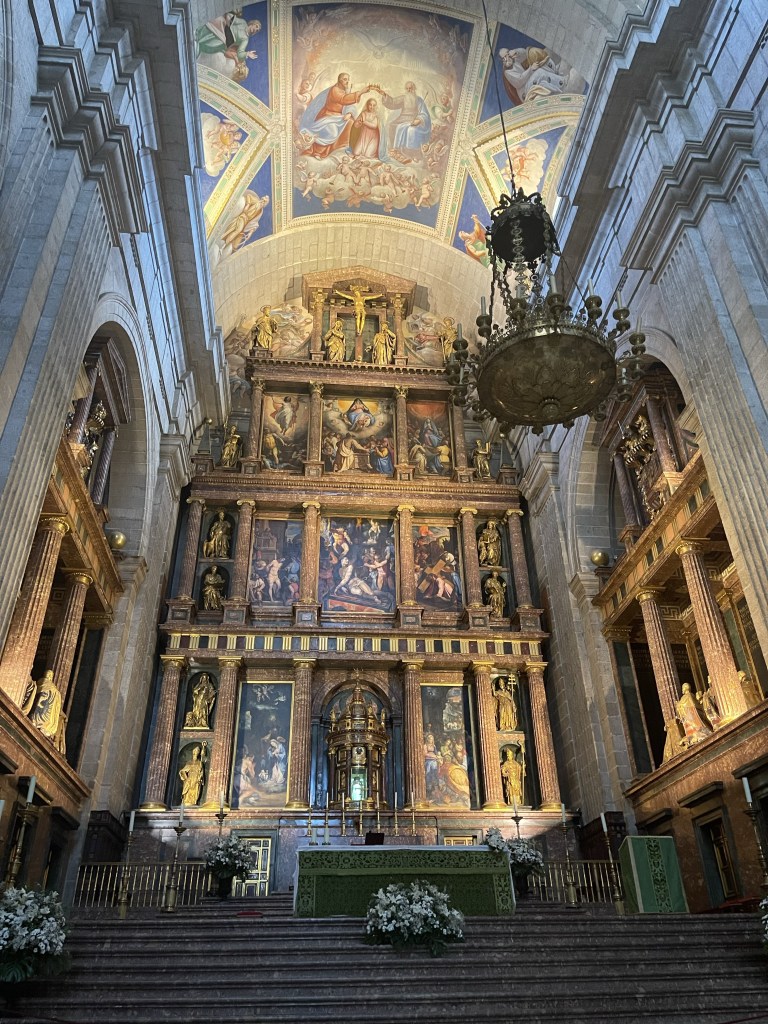
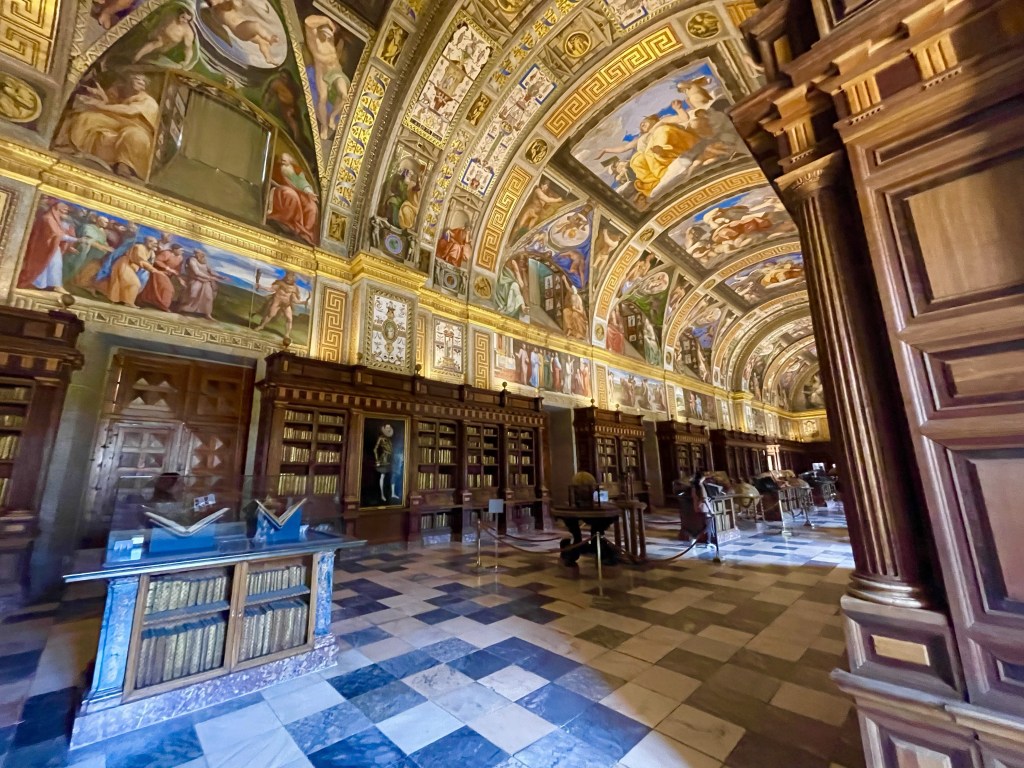
Her name is María. She says 90% of Spanish girls are given the name María as a first or middle name to honor the Virgin Mary. She is an excellent guide and tells me a lot of the nuances of why things were done the way they were. Honestly, it was fascinating. We see the king’s and queen’s apartments which have doors that open on either side of the huge basilica altar. They could go to mass without getting out of their beds. In the library, every book spine was covered with gold to indicate the wealth of the king.
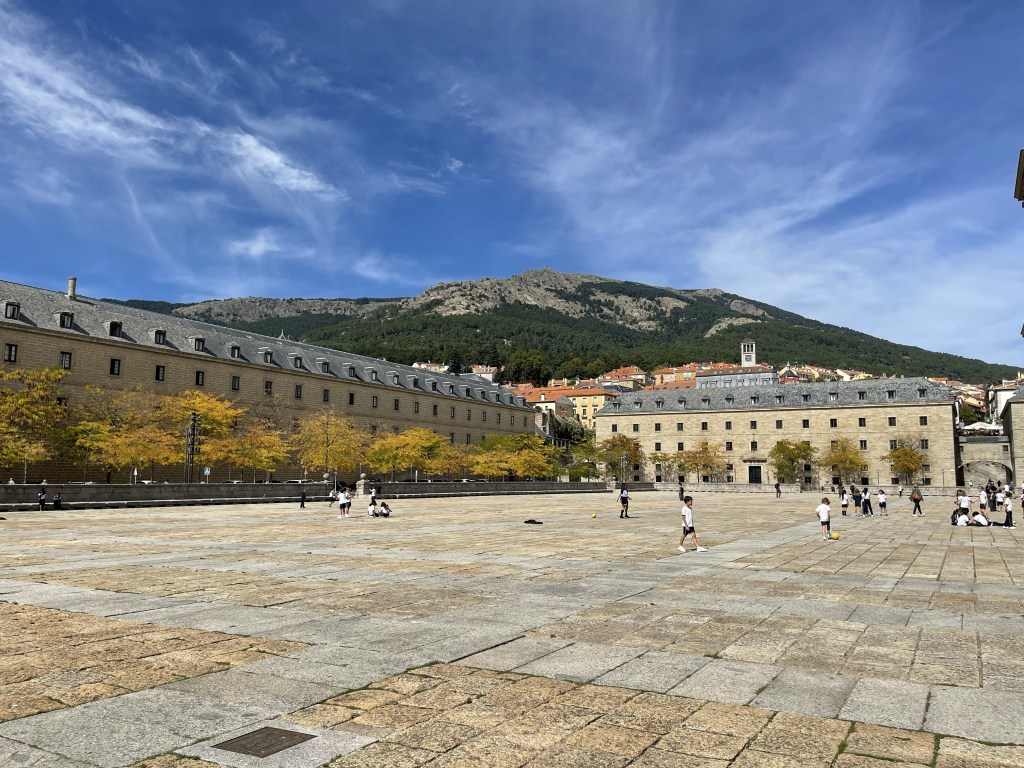
After the tour, I walk into the little town and pick an outdoor cafe for a salad. Then it’s a lovely walk back thru the Prince’s Palace garden to the train station home.

We have come to the end of act 1 of the Shirleyfest Beatles Musical post. Act 2, coming right up. First though let me tell you about my Day Tripper goof. In Segovia yesterday, I was ready to catch my 6:30 pm train. I had an hour but I always leave a little buffer. I scoured the aqueduct area for a taxi, but none were to be found. The bus had let me off at the aqueduct that morning, so I thought I’ll just hop on the bus back. I put “Estación de tren de Segovia” into google maps and it said take the #8 bus and get off and walk 5 minutes. Totally doable. A little something in my head said, hmm it was the #11 bus when I came and there was no walking. So I look again and check the translation of “train station”……. same answer on google maps. Ok here comes the #8 bus. I hop on. Nice driver. I sit up front. We go a little while and I look up and the bus is going into the mountains. Woah! “Señor, ?Estación de tren Segovia?” He laughs. “ No no Wrong bus! You should have taken the #11.” He says all in Spanish. Yikes. He says “No te preocupes, te ayudaré. siéntate.” (I will help you. Sit down….I surmise) He starts looking carefully out the window. Another 10 minutes and I’m getting nervous. All of a sudden he pulls the bus over and says, “ look taxi— go”. I hop off the bus and run towards the taxi on the side of the road. “Hola” He opens the door and we speed off. I tell him the train station. I follow him on google maps and he is going nowhere near where google maps has the train station. Train station I say again in broken Spanish. “Si si.”10 more minutes. Suddenly we pull up outside the train station. I make my train. I really can’t let this go and I research when this train station opened. 2007. The one the google maps identified as the station was replaced in 2007! Thanks google maps.
Act 2 next post, “Happy Birthday”
Thanks for following along!
 Shirleyfest
Happy Birthday Shirley âanother fabulous trip.
LikeLiked by 1 person
Thank you Joan!
LikeLike